
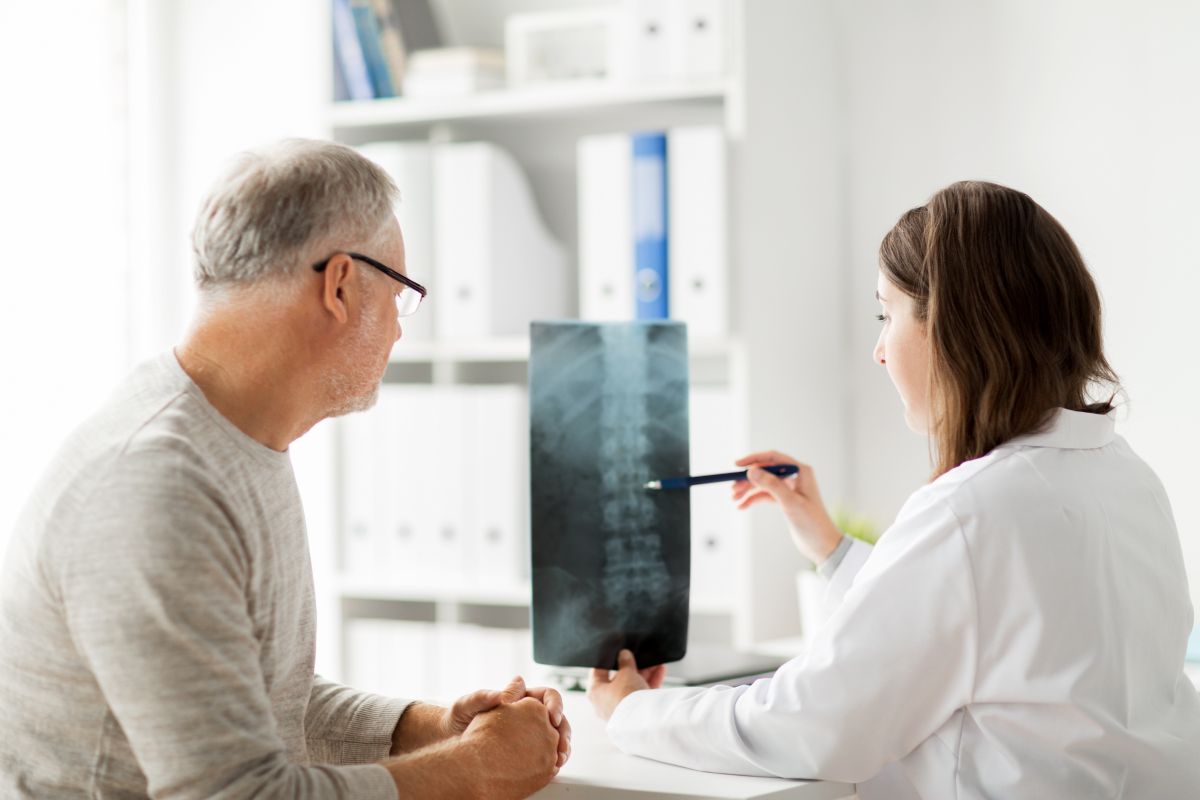
At Haynes Neurosurgical Group, treatments and surgeries for spinal disorders are approached with precision and painstaking care. We recognize the profound impact spinal health has on overall well-being and offer specialized attention and personalized solutions for a wide range of spinal disorders.
The focus is to restore mobility, alleviate pain, and enhance the overall quality of life for our patients. Our neurosurgery team’s expertise extends beyond technical proficiency. We are leaders in our field, with a deep understanding of the nuanced nature of spinal disorders and a commitment to restoring physical health for each patient.
Our neurosurgeons specialize in the treatment of a vast array of spinal disorders.

When disc material pushes beyond its normal position, it may compress nearby nerves, causing pain, numbness, or weakness.
Narrowing of the spinal canal or other spaces within the spine that can place pressure on the spinal cord or nerves.
An abnormal sideways curvature of the spine that may require specialized treatment depending on its severity and associated symptoms.
Changes in the spinal discs that may contribute to neck or back pain, stiffness, and reduced mobility.
Abnormal growths involving the spine or surrounding neurological structures that may require specialized evaluation and treatment.
Injuries caused by accidents, falls, or other trauma that may affect spinal stability, the spinal cord, or surrounding nerves.
Treatment for spinal disorders depends on the diagnosis, severity of symptoms, and overall spinal health. We evaluate both non-surgical and surgical options to determine an appropriate course of care.
Not every spinal condition requires surgery. Depending on your diagnosis and symptoms, conservative treatments may help manage pain, reduce inflammation, and support mobility. Non-surgical options may include:
Tailored exercises and therapeutic techniques to strengthen supporting muscles, improve movement, and manage spinal pain.
Medications to help control pain and inflammation associated with spinal conditions.
Targeted injections, such as epidural or facet joint injections, that may help reduce inflammation and relieve certain types of spinal pain.
Injections of anesthetic or anti-inflammatory medication used to help manage pain associated with affected nerves.
Our surgical capabilities include spinal decompression, spinal fusion, artificial disc replacement, and minimally invasive procedures. Each technique serves a different purpose, and the recommended approach depends on the underlying spinal condition and clinical findings.
A discectomy is a spinal decompression procedure that removes part or all of a damaged disc to relieve pressure on nearby nerves. It is commonly used to treat pain, numbness, and weakness caused by nerve compression. Depending on the affected area, we may perform
Our neurosurgeons also consider minimally invasive discectomy for suitable patients.
Spinal fusion joins two or more vertebrae to stabilize the spine and limit movement between them. It may be used to address conditions such as degenerative disc disease, scoliosis, or spinal instability, with the aim of reducing pain and supporting spinal stability.
During the procedure, we place bone graft material between the vertebrae and may use screws, plates, or rods to maintain stability while new bone grows and the vertebrae gradually fuse.
Artificial disc replacement, also called total disc arthroplasty, involves replacing a damaged or degenerated spinal disc with an artificial or prosthetic disc. It helps treat severe disc-related conditions in the spine
Unlike spinal fusion, this procedure is designed to preserve movement at the treated spinal level while helping relieve pain and maintain function.
We evaluate the extent of disc damage, spinal health, and medical history to determine whether disc replacement is appropriate. When selected, the procedure involves removing the damaged disc and placing an artificial implant through a surgical approach suited to the affected spinal level.
Minimally invasive procedures for spinal disorders involve advanced techniques that require smaller incisions, cause less disruption to surrounding tissues, and often result in faster recovery times compared to traditional open surgery.
Our commitment to innovation ensures that you receive the latest advancements in spinal disorder treatment. Some minimally invasive techniques we can employ for spinal conditions include:
A procedure that removes a portion of a herniated disc to relieve pressure on an affected spinal nerve.
A decompression procedure involving the removal of part or all of the lamina (bony arches on the vertebrae), the bony arch at the back of a vertebra, to create more space for compressed neurological structures.
A procedure that uses specialized bone cement to stabilize certain vertebral compression fractures.
A procedure that may use a balloon or other device to create space within a compressed vertebra before bone cement is inserted, potentially restoring some vertebral height while stabilizing the fracture.
Not all these procedures are necessarily performed using a minimally invasive approach in every case, and the potential benefits vary by technique and diagnosis. We evaluate the nature of your spinal disorder, overall health, and treatment needs to determine which surgical approach may be appropriate.
At Haynes Neurosurgical Group, we combine unmatched precision in neurosurgical techniques with personalized care, tailoring each intervention to your unique needs. Our commitment to excellence, innovation, and patient-centered care ensures you receive the best possible outcome for your spinal condition.
To schedule a consultation with one of our experts, call us at (205) 787-8676 or request an appointment online.
Phone: (205) 787-8676
Fax: (205) 785-7944
801 Princeton Avenue, S.W.
Suite 310
Birmingham, AL 35211
Located on Floor 3 of Professional Office Building 1.


